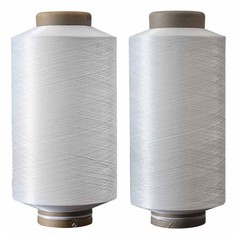
Nylon Composite Yarn
Description
Technical Parameters

SHENGFA: Your Professional Composite Yarn Supplier!
Jiaxing Shengfa Trading Co., Ltd. is a comprehensive textile enterprise that integrates research, development, production, and sales. With over ten years of professional experience, we are dedicated to the production of warping heads, providing efficient warping solutions for our customers. The company currently employs over 100 individuals, including professional technical personnel and an experienced production team.
Our Advantages
Innovation-Based Product
We focus on innovation to meet diverse customer needs. Our main products include processing warping heads, well-warped heads, composite yarns, bright yarns, semi-dull yarns, polyester mother yarns, nylon mother yarns, and specialty yarns.
Customized Services Available
As a customer-oriented enterprise, we provide customized services for various textiles, composite yarn raw materials, and warping heads. We also assist customers in sourcing various textile products domestically, providing comprehensive solutions.
Extensive Sales Market
With excellent quality and excellent service, our products are exported to Germany, Europe, the United States, Singapore, South Korea, the Middle East, South America, and other countries and regions.
24-Hour Service
Our professional team can analyze and take samples based on the samples provided by customers to provide high-quality references. We can quickly solve any problems customers encounter.
Composite Yarns for Sale Display
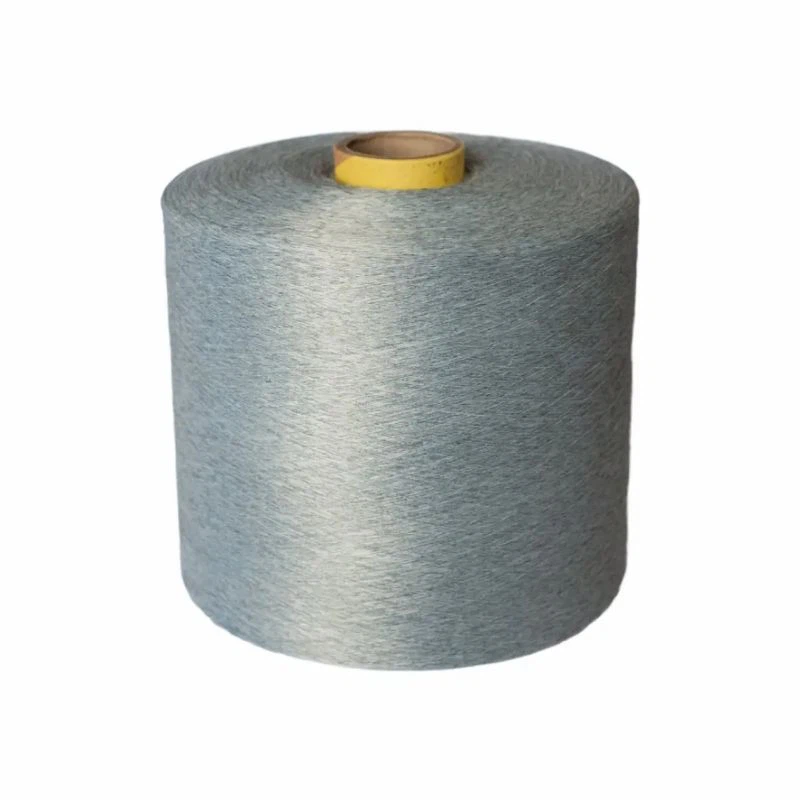
Functional Composite Yarn (FCY) is a fabric made of conventionally produced yarns of various materials combined into a composite. These properties can include but are not limited to moisture-wicking, antibacterial, flame-retardant, conductive, or even self-healing capabilities.

Sunlight Polyester Composite Yarn
Sunlight polyester composite yarn is a type of composite yarn that incorporates polyester fibers engineered to resist damage from exposure to sunlight. It can withstand UV radiation, preventing fading, degradation, and other forms of damage caused by sunlight exposure.

PTT POY stands for Polytrimethylene Terephthalate Partially Oriented Yarn. PTT is known for its unique properties, including excellent elasticity, resilience, and softness. POY indicates that the yarn is partially oriented, referring to the degree of molecular alignment in the fibers.

PBT POY stands for Polybutylene Terephthalate Partially Oriented Yarn. PBT POY finds applications in various industries including textiles, automotive, and electrical insulation due to its favorable mechanical and thermal properties.

Stretch Highly Oriented Yarn (SHOY) is a type of yarn that has been highly oriented during the manufacturing process, resulting in enhanced stretchability and elasticity. This yarn provides superior stretch characteristics compared to traditional yarns.

Partially Oriented Yarn commonly known as Polyester POY refers to multi-filament yarn that is only partially stretched. It is the primary form of yarn made by spinning polyester melt/chips. It is mainly used for manufacturing textured yarn; however, it can also be used in draw warping for weaving and warp knitting of fabrics.
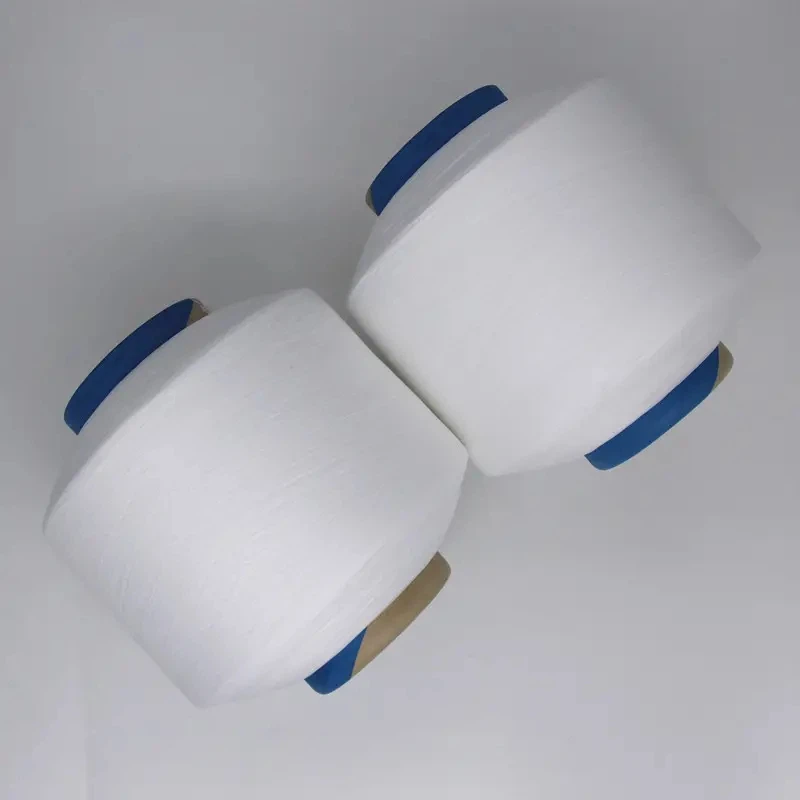
Spandex-covered yarn, also known as core-spun yarn, is a type of yarn where a core yarn, often made of a natural or synthetic fiber, is wrapped or covered with spandex fibers. This construction makes it suitable for activewear, lingerie, and socks.

Thermoplastic yarn refers to a type of yarn made from polymers that become soft and pliable when heated and solidify when cooled. These yarns can be melted and reformed multiple times without significant degradation.

Cotton composite yarn is a type of yarn that combines cotton fibers with other materials to create a blended or composite yarn. The purpose of blending cotton with other fibers is to enhance the properties of the yarn, such as strength, durability, elasticity, or moisture-wicking capabilities.

A compound yarn typically consists of two or more different fiber strands in a core-wrap structure with the idea being to get a net effect combining the characteristics of the core and the cover components. Many of the core-wrap yarns consist of core filament(s) wrapped or covered by a yarn.
Advantages of Composite Yarns
Enhanced Performance
Blending different types of fibers allows for the combination of their individual properties, resulting in enhanced performance characteristics in the yarn. For example, blending natural fibers with synthetic fibers can create yarns that possess the softness, breathability, and moisture absorption of natural fibers, along with the strength, durability, and wrinkle resistance of synthetics. This enables the production of yarns that offer the best of both fiber types, providing improved performance in terms of comfort, durability, and functionality.

Increased Durability
Composite Yarns can exhibit improved durability compared to single-fiber yarns. By combining fibers with different strengths and properties, blended yarns can be engineered to withstand various stresses, such as abrasion, stretching, or washing. This results in yarns that are more resistant to wear and tear, extending the lifespan of the textiles made from them.
Improved Aesthetics
Composite Yarns can be used to create visually appealing effects and unique textures in fabrics. Combining fibers of different colors, finishes, or textures can result in interesting visual effects, such as heathered or mélange effects.

Improved Dimensional Stability
Composite Yarns can contribute to improved dimensional stability in fabrics. By blending fibers with different shrinkage or expansion properties, Composite Yarns can help minimize issues such as fabric shrinkage or distortion after washing or stretching. This results in fabrics that maintain their shape and fit over time.
Popular Yarn Materials
Wool
This is the material you probably thought of immediately when considering the yarn to knit with. Wool is the traditional choice, and is popular; especially for knitting sweaters. Wool is warm, cosy, absorbent and breathable, and also lasts a long time if you take good care of it. It's also reasonably stretchy and has a good drape (drape = how it hangs on the body). Yarn can also be made from the hair/fleece of other animals such as goats (Mohair and Cashmere yarn), rabbits (Angora yarn), and alpacas (Alpaca yarn). These are very soft yarns, but expensive - especially in their pure form.
Acrylic
This is a man-made material (compared to wool which is natural), and supplied either as 100% acrylic or as a 'blend' where acrylic is combined with another material such as wool. It's usually the best value choice and good for beginners on a budget. It's durable and reasonably warm (although not as warm as wool) and is easy to wash. Quality matters when choosing acrylic yarn because some can be quite rough whilst others are soft. There is quite a difference between the best quality and the worst. Therefore, if you can go into a yarn shop and feel the yarn before you buy it that would be the best way to find a yarn you like.
Cotton
With regards to knitting garments, cotton can be a good choice for more summery options, as it has a good drape and is light, cool and breathable. Cotton is also absorbent (and therefore a good choice for washcloths), plus it has good durability and is easy to wash. Cotton doesn't have much stretch though, so it (obviously) wouldn't be a good option for making anything stretchy, such as a ribbed hat, and it's also harder to hide mistakes and inconsistencies when knitting with cotton (so may present more of a challenge for beginners).
Blends
Blends are where 2 or more materials are blended together into one yarn. The resulting yarn then includes the attributes of all of the materials within it. For example, a wool/nylon blend is often used for socks because wool is warm but not particularly durable, and nylon adds durability to the mix. An acrylic/wool blend is popular due to it being less expensive than wool whilst still retaining advantages of wool, and the acrylic content means that the yarn is easier to wash and a bit more durable.
Factors to Consider Before Choosing Composite Yarns
Yarn weight
Yarn weight refers to the thickness of the yarn strand, which significantly affects the look and feel of your finished project. (In this scenario, the term "yarn weight" does not mean how heavy a skein of yarn is.)
Fiber Content
Yarns can be made from all sorts of fiber, from sheep's wool to bamboo. Different fibers have different properties, which can affect the drape, texture, and care requirements of the finished project.
Texture
Yarns can range from smooth and shiny to fuzzy and textured, depending on the fiber content or the spinning process. As you might have guessed, different yarn textures are better suited to different types of projects.
Color
Yarns come in a rainbow of color options, from solid colors to variegated, self-striping, and ombre shades.
Ultimate FAQ Guide to Composite Yarns
Hot Tags: nylon composite yarn, China nylon composite yarn manufacturers, suppliers, factory, Stretch Highly Oriented Yarn, Polyester DTY Warping Head, Fancy Yarn, Well Warped Textured Polyester Bright Yarn, Polyester Colored Yarn Water Jet Loom Warping Head, Spandex Covered Yarn
Previous
PTT POYSend Inquiry