



SHENGFA: Your Professional Composite Yarn Supplier!
Jiaxing Shengfa Trading Co., Ltd. is a comprehensive textile enterprise that integrates research, development, production, and sales. With over ten years of professional experience, we are dedicated to the production of warping heads, providing efficient warping solutions for our customers. The company currently employs over 100 individuals, including professional technical personnel and an experienced production team.
Our Advantages
Innovation-Based Product
We focus on innovation to meet diverse customer needs. Our main products include processing warping heads, well-warped heads, composite yarns, bright yarns, semi-dull yarns, polyester mother yarns, nylon mother yarns, and specialty yarns.
Customized Services Available
As a customer-oriented enterprise, we provide customized services for various textiles, composite yarn raw materials, and warping heads. We also assist customers in sourcing various textile products domestically, providing comprehensive solutions.
Extensive Sales Market
With excellent quality and excellent service, our products are exported to Germany, Europe, the United States, Singapore, South Korea, the Middle East, South America, and other countries and regions.
24-Hour Service
Our professional team can analyze and take samples based on the samples provided by customers to provide high-quality references. We can quickly solve any problems customers encounter.


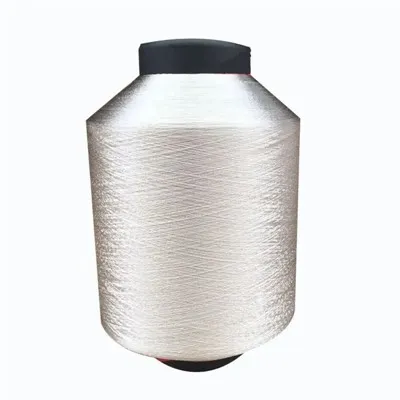
Composite yarns are produced from yarns with differing advantageous properties. Composite yarns produced by covering sheath fibers around a filament or staple fiber core with a certain twist are known as core-spun yarns.
Advantages of Composite Yarn
Enhanced Performance
Composite yarns are created by combining different types of fibers or materials, each with its own unique properties. By blending fibers with specific characteristics, composite yarns can be engineered to possess enhanced performance attributes such as strength, durability, elasticity, moisture-wicking, or thermal insulation. This allows for the creation of yarns that are tailored to meet specific functional requirements.
Cost Efficiency
Composite yarns can be an economical choice compared to using pure or single-fiber yarns. By blending different fibers, manufacturers can achieve desired properties at a lower cost, as certain fibers may be more affordable or readily available compared to others.
Improved Aesthetics
Composite yarns can be used to create visually appealing effects and unique textures. By blending fibers of different colors or finishes, composite yarns can produce interesting visual effects, such as heathered or mélange effects. These yarns can add depth, richness, and aesthetic appeal to fabrics and garments.
Improved Comfort
Composite yarns can be engineered to enhance comfort in textiles. By combining fibers with moisture-wicking properties or fibers that provide insulation, composite yarns can help regulate body temperature, keeping the wearer cool or warm as needed. Additionally, blending fibers with soft and smooth textures can enhance the comfort and feel of fabrics against the skin.
Application of Composite Yarn
Textiles
Composite Yarns are used in the production of carpets, rugs, upholstery, and other textiles. They are known for their durability and resistance to wear and tear. Packaging – Composite Yarns are used in the production of packaging materials, such as bags, sacks, and wrapping materials. They are lightweight, strong, and resistant to moisture and chemicals.

Geotextiles
Composite Yarns are used in the construction industry for soil stabilization and erosion control. They can also be used in the production of geotextile fabrics for roadways, railways, and other infrastructure projects.

Agriculture
Composite Yarns are used in the production of crop covers, shade nets, and other agricultural fabrics. They provide protection against pests, UV rays, and harsh weather conditions.

Automotive
Composite Yarns are used in the production of car seats, floor mats, and other automotive components. They are resistant to wear and tear and can withstand high temperatures.
Textile industries can make blended yarns by combining two different fibers for strength, alluring, and durability. There is a tremendous call for cotton blends across the world as 100% cotton goods are relatively expensive, and the combination cuts down the prices and offers excellent benefits. Different fibers are often blended, and the merging is utilized for a range of purposes to experience the quality and gain additional benefits. The textile industries usually combine premium quality cotton with various threads to achieve enormous strength, smoothness, and tremendous resistance.
Cotton and Polyester
It is the most enduring blend in the textile market. When the strength and radiance of polyester blend with cotton’s softness and breathability, they works wonders for the textile industry. Cotton and polyester are blended in the proportion of 65:35 respectively to maintain comfort, skin-friendly characteristics, and breathability. Other usual cotton-polyester blends are 67%-33%, 50%-50%, and 70%-30%.
Cotton and Viscose
For additional comfort and uniformity, cotton is blended with Viscose. Only Viscous is considered not suitable for use. When combined with cotton, it provides excellent comfort. These blends have a significant proportion of cotton. 85%-15% and 70%-30% are the most common cotton-viscose blended yarns
Cotton and Acrylic
The acrylic offers softness, warmness, and durability, whereas cotton contributes to the next level of comfort. This is a perfect blend for more comfortable, warm, and yet light apparel. The common blend proportions of cotton-acrylic are 75%-25%, 60%-40%, and 50%-50%.
Cotton and Wool
The comfort, softness, and durability of the cotton fabric can be taken to an entirely new level when blended with wool. Wool gives warmth, ingest, and shape to the blend of cotton and wool. It provides warmth in cold weather without feeling bulky to the user.
Cotton and Nylon
Nylon is meant to add strength, and smoothness and it is wrinkle resistant. Cotton when blended with nylon gives it more stretch and durability. The blend makes it suitable for warp yarns in durable fabrics with antistatic properties, which can be dyed.
Factors to Consider Before Choosing Composite Yarns
Project
Kindly decide the project you are going to crochet first, this is the first step to choosing yarn, the yarn should always be decided according to your project.
Material
Choose a yarn based on the characteristics you want your crocheted item to have. For example, if you want to crochet an absorbent and hard-wearing rag, cotton yarn will be your best choice, while if you want a soft and skin-friendly scarf, try mohair. Be aware that some people may be allergic to wool, so ask about allergies if you're crocheting for someone else.
Weight
Yarns that are too fine can be difficult to see stitches, while yarns that are too thick can be difficult to control, so it is best for beginners to use medium-weight yarns, which are classified as category 4 or 5 on the yarn label. In addition, plied yarns (made by twisting two or more single yarns together) have better stretch, and abrasion resistance, and are more tangle-resistant, which makes them easier for beginners to control, and it is better to try to avoid single-knitted yarns, which are prone to unraveling.
Color
Although textured yarns are beautiful, this is harder for beginners to see stitches, so to not frustrate your confidence try to choose a lighter, brighter solid color yarn. If the project requires you to buy multiple balls of yarn, they should be of the same dye lot; generally, yarns from the same dye lot will have much less color variation than others.
Ultimate FAQ Guide to Composite Yarn
As one of the leading composite yarn manufacturers and suppliers in China, we warmly welcome you to wholesale high-grade composite yarn from our factory. All customized products are with high quality and competitive price.
Textured Yarn FDY Warping Head, Nylon DTY Warping Head, Functional Composite Yarn