


SHENGFA: Your Professional Synthetic Fiber Raw Material Supplier!
Jiaxing Shengfa Trading Co., Ltd. is a comprehensive textile enterprise that integrates research, development, production, and sales. With over ten years of professional experience, we are dedicated to the production of warping heads, providing efficient warping solutions for our customers. The company currently employs over 100 individuals, including professional technical personnel and an experienced production team.
Our Advantages
Innovation-Based Product
We focus on innovation to meet diverse customer needs. Our main products include processing warping heads, well-warped heads, composite yarns, bright yarns, semi-dull yarns, polyester mother yarns, nylon mother yarns, and specialty yarns.
Customized Services Available
As a customer-oriented enterprise, we provide customized services for various textiles, composite yarn raw materials, and warping heads. We also assist customers in sourcing various textile products domestically, providing comprehensive solutions.
Extensive Sales Market
With excellent quality and excellent service, our products are exported to Germany, Europe, the United States, Singapore, South Korea, the Middle East, South America, and other countries and regions.
24-Hour Service
Our professional team can analyze and take samples based on the samples provided by customers to provide high-quality references. We can quickly solve any problems customers encounter.


Synthetic fibres are made only from polymers found in natural gas and the by-products of petroleum. Synthetic fibres are man-made fibres, most of them are prepared from raw material petroleum called petrochemicals. All fabrics are obtained from fibres, while fibres are obtained from artificial or man-made sources.
Types of Synthetic Fiber Raw Materials
Polyester
Polyester fibers are synthetic fibers that are extremely useful in a wide variety of applications. In this case, it is used in textiles, garments, insulation, and other industrial applications. Moreover, it is included in some medical applications, and polyester fibers are useful in clothing because they do not crease. Then, the properties of polyester fibers are durable, heat and cold resistant, stain-resistant, and easy to clean, especially commonly used in clothing, blankets, home decorations, carpets, automotive materials. and other textiles.
Nylon
Nylon is a thermoplastic polyamide with many features that make it versatile, such as clothing, upholstery, and auto parts. Then, Nylon can be used in many medical devices, fishing lines, net ropes, and cables. In this case, it is often mixed with other materials. As a result, it creates new fabrics with different properties or improves the original material's performance in specific applications, such as heat resistance or strength.
Rayon
Rayon is a manufactured fiber from cellulose mixed with chemicals with a new synthetic to produce fabrics that mimic natural fibers. In this case, it is also known as artificial silk because it is soft and luxurious, like silk with softness and a luxurious feel. Additionally, it has many uses in clothes, such as skirts, blouses, dresses, and suits.
Spandex
Spandex, also known as Lycra or Elastane with a very flexible synthetic fiber that has the flexibility and durability to be stretched 6-7 times. In this case, the original length. Spandex is blended with a variety of fibers to increase flexibility. Then this makes it suitable for clothing, such as leggings, tights, tights, bodysuits, swimwear, tights, and other clothing to be worn close to the skin.
Acrylic
Acrylic fibers are soft, puffy, lightweight synthetic fibers that resemble wool. Then, it can be used in many ways because it is durable with flame retardant properties and easy to clean. Additionally, Acrylic fibers can use for various applications such as sweaters, hats, scarves, socks, blankets, carpets, furniture upholstery, bedding, curtains, and others.
Microfiber
Microfiber is a skinny and short fiber with a diameter of fewer than 10 micrometers, and it is commonly used to make wipes because it has good absorbency properties. However, it does not leave water marks to create wrinkles.
Advantages of Synthetic Fiber Raw Material
Affordability
Synthetic fibers are very versatile and affordable materials. They are very cheap to produce and have fantastic properties compared to natural fibers. Synthetic fibers have conquered the world and are found in many applications today. One of the most successful synthetic fibers is polyester.
Durability
Synthetic fibers are considered more durable than natural fibers. Most thermoplastic polymers contain different crystalline structures from petroleum-based plastics. Synthetic fibers can have very high density, tensile strength, resilience, and durability. They have good abrasion and chemical resistance with advantageous physical and mechanical properties. They also resist cuts, ripping, and tearing.
Elasticity
Synthetic fibers are strong, elastic, and lightweight. The stretching of polymer chains causes fibers to extend then return to their original size and shape. Synthetic fibers are very elastic materials and become easier to stretch over time. They have internal resistance to deformation under an applied load.
Colorfastness
Synthetic fibers are more colorfast than natural fibers. Manufacturers can easily dye synthetic fibers in many brilliant colors. The dyeing of artificial textile materials also resists fading. Fabrics made from synthetic fibers have a strong binding force between dye and the fibers. They can resist running and maintain bright colors under washing, exposure to sunlight, moisture, wear and tear.
Wrinkle Resistance
Synthetic fibers have good wrinkle resistance. While natural fibers wrinkle easily, artificial fabrics are lightweight, durable, and resistant to abrasion, wrinkles, and creases. Synthetic fibers stay wrinkle-free much longer than natural fibers. They have high flexibility, which makes them maintain smoothness over long periods.
Heat Resistance
Synthetic fibers capture heat well and are highly resistant to sunlight and UV degradation. They can resist high temperatures without showing substantial damage.
Water Resistance
Synthetic fibers resist hot and humid weather very well. They have high water resistance, can even be water repellant or waterproof, and are quick-drying, unlike many natural fibers such as cotton or wool. Synthetic fabrics are ideal for staying dry and protected from humidity. They endure water splashes and even moving through the water much better than natural fabrics.
Moth Resistance
Unlike most natural fibers, synthetic fibers are resistant to attacks from moths, mildew, bacteria, molds, insects, fungi, and many everyday chemicals.
Application of Synthetic Fiber Raw Material


Textiles
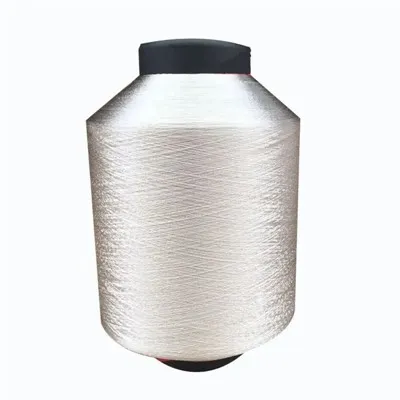
Synthetic fibres are widely used in the textile industry due to their durability, resistance to wrinkling, staining, and fading. Examples of commonly used synthetic fibres in textiles include polyester, nylon, and spandex. These fibres are used in a variety of clothing, upholstery, and linens, and are popular for their low cost and ease of maintenance. Polyester, for example, is widely used in the production of sportswear, outdoor clothing, and casual wear due to its lightweight and quick-drying properties.
Industrial Applications
These fibres are used in various industrial applications due to their strength and durability. They are commonly used in the production of ropes, cables, and composites, as well as in concrete reinforcement in the construction industry. Aramid fibres, such as Kevlar, are used in bulletproof vests and other protective clothing, due to their high strength and resistance to cutting and abrasion.
Sports Equipment
These fibres are used in sporting goods such as tennis rackets, fishing lines, and ski ropes for their strength and resistance to stretching. For example, tennis rackets made with synthetic fibres offer improved strength and responsiveness compared to those made with natural fibres.
Medical Applications
These fibres are used in medical implants, sutures, and wound dressings for their biocompatibility and non-reactivity with human tissue. For example, sutures made with synthetic fibres offer improved strength and resistance to infection compared to those made with natural fibres.
Packaging
These fibres are used in packaging materials such as polypropylene bags, due to their durability and resistance to moisture and punctures. For example, food packaging made with synthetic fibres offers improved preservation of freshness and protection against contamination.
Home Textile
Synthetic fibres are used in home decor such as carpets, rugs, and curtains for their durability and resistance to staining and fading. For example, carpets made with synthetic fibres offer improved durability and resistance to wear and tear compared to those made with natural fibres.
Processing and Production of Synthetic Fiber Raw Material
Polymerization
Chemical compounds which serve as raw materials for synthetic fibres do not possess the fibre-forming property until they first undergo a chemical reaction called polymerization. To polymerize is to change a chemical compound, by union of two or more molecules of the same kind, into a higher molecular weight compound having different physical properties. The product of the reaction is called polymer.
Polymers of low or average molecular weight cannot be made into commercially usable fibres; rather, the fibre-forming polymers consist of molecules of very high molecular weight, often called “macromolecules.” How such large molecules can be built up is generally explained by the theory that monomer (single) molecules are joined together in long chains. Thus it can be said that in the first step in fibre output polymers with long chain link molecules are synthesized.
Before it becomes a polymer a chemical intermediated is a monomer, the term for the simple non polymerized form of a compound. Thus it can also be said that the first step in synthetic-fibre manufacture is to make polymers out of monomeric raw materials.
In the manufacturing plants there is an area, usually designated the “polymer area, in which the conversion is carried out as a batch or as a continuous process. Quantities of the monomeric raw materials are fed into polymerization reactors under pressure, temperature and duration conditions which vary with the monomers.
Spinning Step
Three spinning technologies are used to make filaments from synthetic polymers: dry spinning, wet spinning, and melt spinning. In all these methods filaments are formed by forcing a viscous polymer through a spinneret, a small die like plate with many fine holes. In the preparation of the polymer for spinning and in the solidification of the newly formed filaments the spinning methods differ in detail.
Dry Spinning
In dry spinning the polymer is dissolved in an organic solvent to form a spinning solution which is extruded through a spinneret into a long tubular spinning cell through which hot air is circulated. The filaments are solidified by the evaporation of the solvent.
Wet Spinning
For wet spinning a solution is prepared in the same way, but it is extruded through a spinneret into a spinning bath capable of coagulating the filaments.
Melt Spinning
In the production of synthetic fibres which can be “melt” spun the preparation of a spinning solution is unnecessary. Molten polymer is forced through the holes in the spinneret by pump action, and the filaments solidify upon contact with a stream of cold air.
Processing the Filaments
After the polymers are spun, the process steps depend on the output mix of the fibre plant. In the production units under consideration here man-made fibres are produced in three different forms for sale to the textile industry – as continuous filament yarn, as staple fibre, or as tow. Synthetic filament yarn consists of a number of fine continuous filaments. For sale to ultimate users it is put up on bobbins with no twist or a light twist. Staple fibre is made by cutting up the continuous filaments into short lengths and is sold in bales to the textile industry for the manufacture of spun yarn.
Spun yarn can also be made from tow, the third form in which synthetic fibres are sold. Textile spinners with traditional spinning equipment must use staple fibre in spun-yarn manufacture. Tow is a collection of many parallel continuous filaments, grouped together in ropelike form and put up into packages without twist. It is sold to manufacturers who have special machines designed for the direct production of spun yarn from tow. The tow is mechanically broken up into short lengths, and the yarn is prepared by methods which eliminate many of the steps in the staple-to-yarn process.
Ultimate FAQ Guide to Synthetic Fiber Raw Material
As one of the leading synthetic fiber raw material manufacturers and suppliers in China, we warmly welcome you to wholesale high-grade synthetic fiber raw material from our factory. All customized products are with high quality and competitive price.
Thermoplastic Yarn, Warping Head