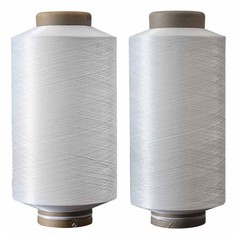
Carbon Fiber Yarn
Description
Technical Parameters
SHENGFA: Your Professional Synthetic Fiber Raw Material Supplier!
Jiaxing Shengfa Trading Co., Ltd. is a comprehensive textile enterprise that integrates research, development, production, and sales. With over ten years of professional experience, we are dedicated to the production of warping heads, providing efficient warping solutions for our customers. The company currently employs over 100 individuals, including professional technical personnel and an experienced production team.
Our Advantages
Innovation-Based Product
We focus on innovation to meet diverse customer needs. Our main products include processing warping heads, well-warped heads, composite yarns, bright yarns, semi-dull yarns, polyester mother yarns, nylon mother yarns, and specialty yarns.
Customized Services Available
As a customer-oriented enterprise, we provide customized services for various textiles, composite yarn raw materials, and warping heads. We also assist customers in sourcing various textile products domestically, providing comprehensive solutions.
Extensive Sales Market
With excellent quality and excellent service, our products are exported to Germany, Europe, the United States, Singapore, South Korea, the Middle East, South America, and other countries and regions.
24-Hour Service
Our professional team can analyze and take samples based on the samples provided by customers to provide high-quality references. We can quickly solve any problems customers encounter.
Synthetic Fiber Raw Materials for Sale Display

Polyester Composite Yarn integrates the strength of polyester fibers with the softness of other special fibers, providing excellent toughness and a soft touch to fabrics. We offer a rich selection of colors to meet the needs of different designs and applications.

Nylon composite yarn refers to a type of yarn that is made by combining nylon fibers with other materials to create a composite or blended yarn. The yarn can offer enhanced characteristics such as increased strength, improved moisture-wicking, better dyeability, or added texture.
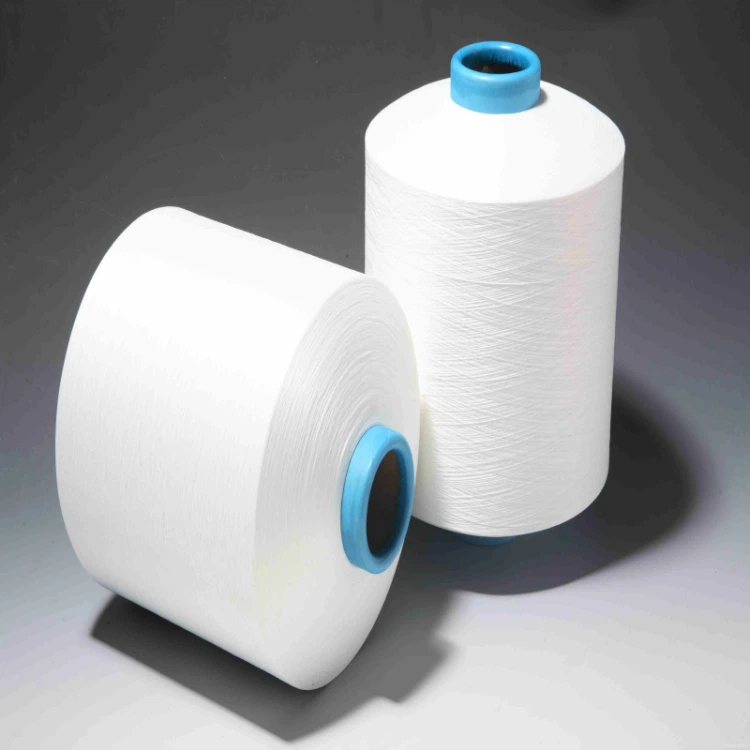
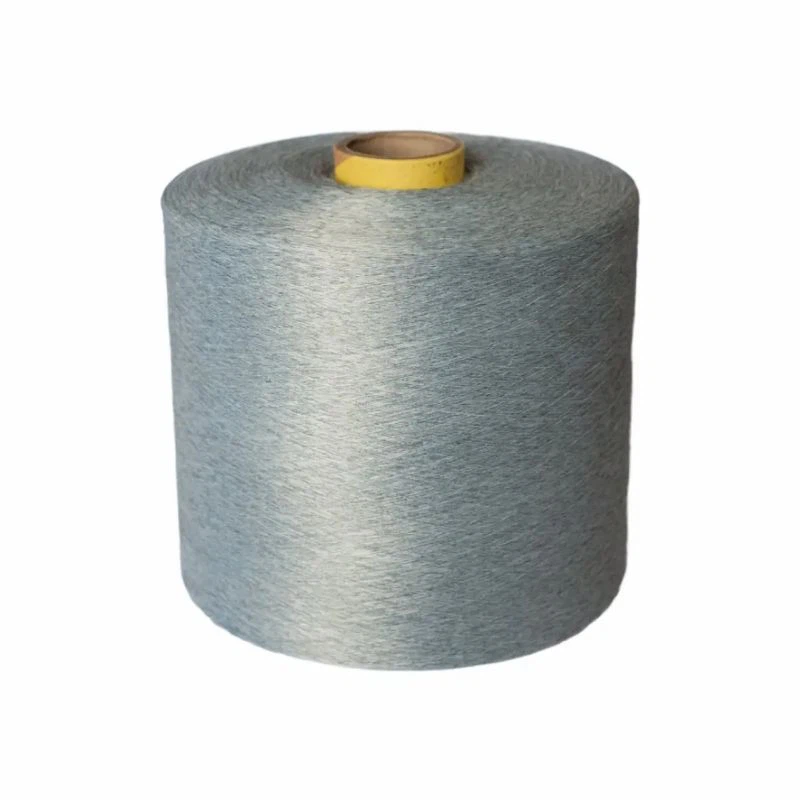
Carbon fiber yarn is a type of yarn that is composed of thin strands of carbon fibers. Carbon fibers are extremely strong and lightweight materials that are made by heating precursor materials, such as polyacrylonitrile (PAN) or pitch fibers, at high temperatures in the absence of oxygen.

Our Cotton Composite Yarn blends the softness of cotton with enhanced features, ensuring a comfortable and breathable feel. From everyday clothing and home textiles to innovative fashion pieces, Cotton Composite Yarn adds a touch of comfort and style.

Thermoplastic yarn refers to a type of yarn that is made from thermoplastic materials. Thermoplastics are a class of polymers that can be melted and re-molded multiple times without undergoing significant chemical changes. It can be easily processed and shaped using heat.
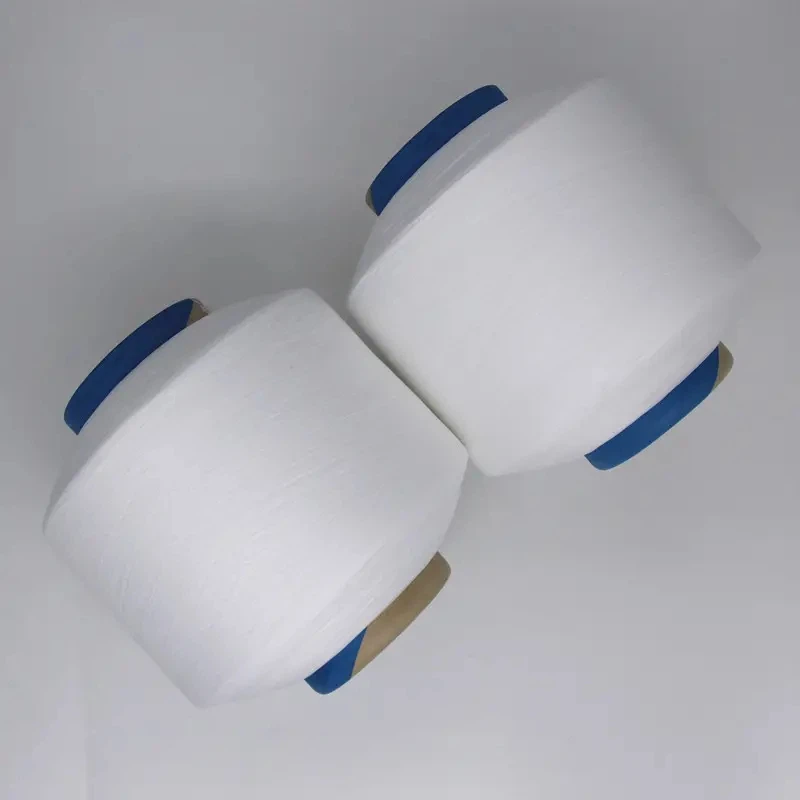
Spandex-Covered Yarn is engineered for unparalleled stretch and flexibility, providing comfort and freedom of movement in textile applications. You can experience the versatility of it across various industries, such as sportswear, undergarments, or medical textiles.

Partially Oriented Yarn (POY) is incompletely stretched filaments with an orientation degree between unoriented filaments and drawn filaments obtained by high-speed spinning. Compared with undrawn yarn, it has a certain degree of orientation and good stability, but cannot be used for textile processing.

Stretch Highly Oriented Yarn is renowned for its exceptional stretchability. Crafted using cutting-edge techniques, SHOY undergoes a meticulous process to achieve a high level of orientation, resulting in enhanced strength and resilience.

PBT POY stands for Polybutylene Terephthalate Partially Oriented Yarn. It is a type of yarn made from polybutylene terephthalate, which is a thermoplastic polyester resin.

Synthetic fibers or synthetic fibres are fibers made by humans through chemical synthesis, as opposed to natural fibers that are directly derived from living organisms, such as plants (like cotton) or fur from animals. They are the result of extensive research by scientists to replicate naturally occurring animal and plant fibers. In general, synthetic fibers are created by extruding fiber-forming materials through spinnerets, forming a fiber. These are called synthetic or artificial fibers.
Types of Synthetic Fiber Raw Materials
Polyester
Polyester is a widely used synthetic fabric known for its durability, wrinkle resistance, and resistance to stretching and shrinking. It is often blended with other fibers to improve its qualities and is commonly used in clothing, home textiles, and industrial applications.
Nylon
Nylon is a strong, lightweight, and elastic synthetic fiber. It has excellent resistance to abrasion and chemicals, making it suitable for various applications, including clothing (stockings, swimwear), ropes, and industrial uses.
Polypropylene
Polypropylene is a thermoplastic polymer used in various applications, including textiles. It is lightweight, moisture-resistant, and has good insulating properties. Polypropylene fabrics are often used in activewear, thermal underwear, and disposable medical garments.
Acrylic
Acrylic fibers are soft, lightweight, and warm. Acrylic fabrics resemble wool and are often cheaper than natural wool in sweaters, blankets, and other cold-weather clothing items.
Rayon
Rayon is a semi-synthetic fiber made from wood pulp. Although it is not entirely synthetic, it is considered a regenerated fiber. Rayon is soft, breathable, and drapes well, making it suitable for various clothing items, including dresses, blouses, and linings.
Spandex (Lycra or Elastane)
Spandex is a highly elastic synthetic fiber known for its exceptional stretch and recovery properties. It is often blended with other fibers to stretch clothing, especially in activewear, swimwear, and garments that require a close fit.
Polyethylene
Polyethylene fibers create fabrics with specific properties, such as high strength and water resistance. These fabrics are used in applications like outdoor furniture, camping gear, and waterproof clothing.
Advantages of Using Synthetic Fiber Raw Materials
Easy to Care:
Synthetic textiles are often easier to care for than natural materials because they are machine-washable and can withstand more wear and tear.
Less Expensive:
They are less expensive than natural materials because they are easier to produce and require less resources to manufacture.
Durable and Resistant:
They are more durable than natural materials and are more resistant to wear and tear over time. This makes them a good choice for items that will be used frequently or in high-traffic areas.
Widely Available:
Synthetic textiles are widely available and can be found in a variety of styles and colours. This makes them a good choice for those looking for a specific look or design.
Application of Synthetic Fiber Raw Material
Clothing
One of the most prevalent uses for synthetic textile fibers is clothing. Synthetic fibers are usually blended with natural fibers to make fabrics more durable, wrinkle-resistant, and easier to dye. They can also be used to create clothes that are lightweight and breathable.
Carpeting
Synthetic fibers are also used to create carpeting for both commercial and residential spaces. These fibers usually offer superior durability and stain resistance. They can also be made with a high level of elasticity, which helps carpets retain their shape even after being walked on multiple times. Additionally, they often come in a wide range of colors and styles, allowing you to choose a carpet that matches your own personal esthetic preferences.
Insulation
Synthetic fibers can also be used in insulation materials, which can help to increase the energy efficiency of buildings. They have superior moisture resistance compared to other materials, meaning they won't absorb dampness or water vapor from the air. This helps to prevent mold or mildew from growing inside walls or ceilings and keeps buildings dryer during wetter seasons.
Difference Between Natural Fibre and Synthetic Fibre
|
Natural Fibre |
Synthetic Fibre |
|
We get these fibres from natural farming, animal husbandry and insects. |
These fibres are generated by man. We do not get these fibres from nature but are generated from natural (cellulose and protein) and chemical substances. |
|
Fibre length is given by nature, that is, fixed. |
Fibre length is not fixed and is controlled by man. |
|
We get fibres as staples or filaments (silk). |
Generally, we get fibres as filament, but we can also get them as staple or cut-length. |
|
Fineness varies from one fibre to another fibre. |
Fineness depends on the manufacturers. |
|
Less strength and durability. |
More strength and durability. |
|
Strength increases in wet conditions. |
Strength increases in dry conditions. |
|
Some short fibres remain with long fibres. |
There is no short fibre. |
|
No need for spinneret. |
Need of spinneret. |
|
No need to mix chemicals to produce fibre or yarn. |
Need to mix chemicals to produce filament or staple. |
|
Apparels produced from natural fibres are comfortable. |
Apparels produced from man-made fibres are less comfortable. |
|
More demandable in producing apparels. |
More demandable in producing other textile end products rather than apparels. |
|
Bears dust and trash. |
Do not bear any dust or trash. |
|
Bears crimp naturally. |
We have to give crimp manually. |
|
Generally, fibres are hydrophilic. |
Generally, fibres are hydrophobic. |
|
In most cases, scouring and bleaching are needed. |
No need for scouring and bleaching but sometimes cleaning is needed. |
|
Easy to dye. |
Difficult to dye. |
|
It is expensive. |
It is cheaper. |
|
Comparatively have less lifetime. |
Comparatively have more lifetimes. |
|
Uses of natural fibre are limited. |
Uses of man-made fibre are not limited. |
|
We cannot change the structure. |
We can change the structure. |
Stages of Manufacturing Synthetic Fibers
Polymerization
In polymerization, small molecules are reacted together to produce polymer chains. There are two types of polymerization:
Condensation polymers are formed by the gradual reaction of functional groups of monomers, usually containing heterogeneous substances such as oxygen or nitrogen.
An addition polymer is a mechanism in which monomers react to form a polymer without forming by-products. In addition, polymerization processes are performed in the presence of catalysts.
Pumping
The molten polymer is pumped through a filter bed and then through small, deep holes. Both units will lead to high-pressure drops along the flow direction of viscous liquids. There are two main types of devices used for pumping liquids: centrifugal pumps and gear pumps. Centrifugal pumps are used to move low-viscosity liquids around in a process, while gear pumps are used to pump high-viscosity liquids at a controlled flow rate.
Filtration
It is cleaning the spinneret plate. Filtration must adhere to very strict standards.
Spinning
The fibers are formed by extruding molten polymer through small holes in the spinneret plate. A plate may contain 1,000 or more holes. The filament thickness is not determined in linear dimensions but in terms of mass per length. There are three methods of spinning:
Melt spinning: In spinning of molten polymers, such as polyester, nylon, and polypropylene. As soon as the molten polymer leaves the spinneret hole, it begins to cool and expand. After the finish is applied, the fibers are gathered at high speed in a process known as spin drawing.
Dry spinning: In the process of dry spinning, solvents are used in which the polymer dissolves, and a solvent evaporates after the solution (spine dope) leaves the spinneret. This process is followed by stretching, applying the finish, and taking follow-up on the spindle or cutting into the staple. This process is more expensive than conventional melt-spinning processes.
Wet spinning: This method is used for polymers that do not dissolve easily. The polymer is dissolved in a solvent, which is extracted into a liquid (water) after the solution (the spin dope) leaves the spindle. The fibers are dried on large, heated cylinders. Then the fibers are sent to a cutting machine to be cut into lengths of 2.5–15 cm. The fibers produced by wet yarns include rayon, kevlar, and acrylic fibers.
● Drawing
Stretching or drawing the filament is the process of pulling long polymer chains to align along the longitudinal axis of the fibers, bring them together, and develop cohesion. During the drawing process, the polymer chains slide over each other as they are pulled to align along the longitudinal axis of the fibers.
Texturing
It is the process of the formation of curls, coils, and loops along the length of filaments to increase porosity, smoothness, and flexibility. From the methods of textured yarns:
Gear crimping: Similar to wool, staple fibers need a crimp to be spun into yarns. This wrinkle may be mechanically inserted by bypassing the filament between gears or chemically by controlling the coagulation to create fibers with an asymmetrical cross-section, with one side thick-skinned, almost soft, and the other thin-skinned and serrated. When wet, the fibers swell to a large extent on the skin-thin side rather than the thick-skinned side, causing wrinkles.
Stuffing: Fiber yarns woven from very large bundles of fibers called a tow are typically zigzagged by feeding two of the tows in a stuffer box, where the tows are folded and pressed against each other to form a plug of the yarn. The plug can be heated by steam, and when cooling, the filaments are curled.
Air-Jet: This method is performed by feeding the threads over a high-velocity jet of air that forces the filament into loops. The textured yarns in this process contain a large number of very fine filaments, which increases the possibility of tangles.
Knit: This texture produces a wavy look like a knitted loop. In this process, the threads are woven into a tubular weave. The fabric is then heated and unwrapped to produce textured yarn.
False Twist: During this method, the filaments are twisted and heated and then untwisted when cold, thus preserving the heat-set spiral shape of the twist.
Finishing and Dyeing
During the final process, the synthetic fibers are treated with several chemicals to develop and improve their appearance. Dyes may be added to the molten solution before the fibers are spun. Fiber is usually dyed after spinning with pigments dissolved in boiling water baths. Synthetic fibers have a very coherent and intertwined structure because the molecular chains are regular and have a high degree of crystallization. The dye molecules settle in the spaces between the molecular chains. Depending on the nature of the synthetic fiber material, space varies in size from one type to another, and it is noted that all synthetic fibers consist of materials that are not water-loving. Therefore, the dyeing rate depends on the internal structure of the fibers.
Ultimate FAQ Guide to Synthetic Fiber Raw Material
Hot Tags: carbon fiber yarn, China carbon fiber yarn manufacturers, suppliers, factory, Well Warped Textured Yarn With Triangle Cross Section, Synthetic Fiber Raw Material, Partially Oriented Yarn, Polyester DTY Water Jet Loom Warping Head, Semi Dull Yarn After Warping, Spandex Covered Yarn
Previous
Fully Degradable YarnNext
PTT POYSend Inquiry